


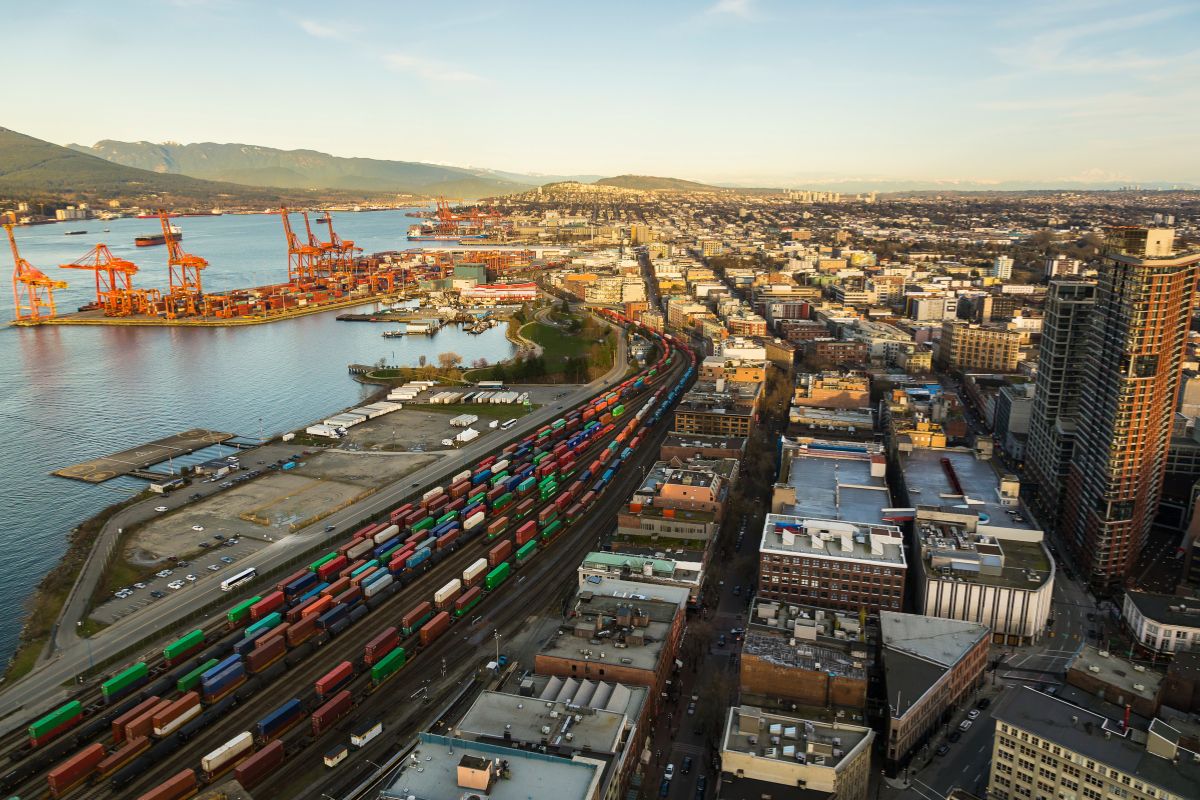
Vancouver is often celebrated as Canada’s Gateway to the Pacific. It is a bustling hub where massive container ships line the horizon, waiting to deliver everything from electronics to fresh produce. But lately, those ships have been staying on the horizon a little too long.
When the Port of Vancouver experiences congestion, it isn't just a headache for ship captains and logistics coordinators. It creates a ripple effect that travels from the docks, through the warehouses, and straight into the living rooms of families across British Columbia.
If you have ever wondered why your favorite cereal is missing from the shelf or why a new sofa takes six months to arrive, you are looking at the direct impact of port congestion.
The Invisible Engine of Your Daily Life
To understand the problem, we first have to understand the scale. The Port of Vancouver is the largest in Canada. It handles roughly $1 of every $3 of Canada’s trade in goods outside of North America.
Think of the port as a giant funnel. Products from all over the world are poured into the top. Under normal circumstances, the "neck" of the funnel is wide enough to let goods flow smoothly onto trucks and trains.
When congestion hits, that neck narrows.
- Ships at Anchor: Dozens of vessels sit idle in English Bay, burning fuel and accruing "demurrage" fees (essentially late fees for ships).
- Terminal Saturation: The docks become so crowded with containers that workers can’t move them efficiently. It becomes a giant game of Tetris where every move takes twice as long.
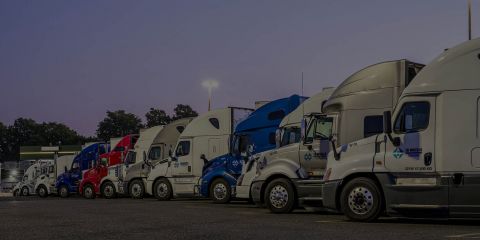
- Rail and Truck Delays: If the trains and trucks can’t get into the port to pick up the goods, the entire system grinds to a halt.
Why the Shelves Look a Little Thinner
Local retailers in Vancouver and the Lower Mainland operate on a "Just in Time" inventory model. This means they don't keep massive backstocks of products in the back room. They rely on a steady, predictable flow of deliveries to keep shelves full.
When the port gets backed up, that predictability vanishes. For a local toy store in Kitsilano or a boutique in Gastown, a two week delay at the port can mean missing the entire holiday shopping window.
Small businesses are hit the hardest. Unlike giant big box retailers, they don't have the capital to charter their own private cargo planes or negotiate priority docking. They are at the mercy of the queue.
The Hidden Tax on Your Grocery Bill
You might not see the congestion, but you certainly feel it at the checkout counter. Port delays are expensive. Every extra day a ship spends at sea and every hour a truck driver spends idling in a terminal queue adds to the final cost of the product.
Logistics companies have to pay for:
- Increased fuel consumption.
- Labor overtime to clear backlogs.
- Warehouse storage fees for "stuck" cargo.
These costs are rarely absorbed by the shipping companies. They are passed down the line. By the time that imported olive oil or those new running shoes reach a store in Burnaby, the price has been padded to cover the "congestion tax." For families already balancing a tight budget, these incremental price hikes across hundreds of household items add up to a significant monthly burden.
The Frustration of the Modern Family
It isn't just about money; it is about time and reliability. We live in an era of instant gratification, but port congestion is forcing us back into a "wait and see" mindset.
Consider a family moving into a new home in Surrey. They order a dining table and a refrigerator. Under normal circumstances, these might arrive in two weeks. During a port crisis, that timeline can stretch to four months.
This uncertainty disrupts life milestones. It means:
- Birthdays without the requested gift.
- Home renovations that stall halfway through because the tiles are stuck in a container.
- Back to school shopping that lasts well into October.
The Role of 18 Wheels Logistics in Smoothing the Path
While we can’t control the number of ships entering the Burrard Inlet, we can control how efficiently goods move once they hit land. This is where specialized logistics and warehousing come into play.
By utilizing advanced "transloading" techniques, companies like 18 Wheels Logistics help bypass some of the worst congestion. Transloading involves moving goods from international shipping containers directly into domestic trailers. This allows the empty shipping container to be returned to the port faster, avoiding heavy fines and freeing up space for the next ship.
Strategic warehousing also acts as a "buffer." By storing goods closer to the end consumer in local BC facilities, we ensure that even if the port hits a snag tomorrow, the local stores have enough stock to keep running for weeks.
Why Vancouver is Uniquely Vulnerable
Our geography is a double edged sword. We are surrounded by mountains and the sea. This makes Vancouver beautiful, but it also means we have very limited "industrial land."
There is only so much room to build warehouses and truck terminals. When the port overflows, there isn't much "overflow parking" for those containers. This lack of space accelerates the congestion.
Furthermore, our infrastructure is a series of bottlenecks. A single bridge closure or a rail line disruption can turn a minor port delay into a regional logistics crisis. This is why local families often see gas prices spike or certain fresh foods disappear almost immediately after a storm or a labor dispute at the docks.
How You Can Support the Local Ecosystem
As a consumer, understanding the "why" behind a delay can take some of the sting out of it. When you buy from a local store that is struggling with inventory, you are helping them weather a global logistics storm.
The Port of Vancouver will always be a busy place. It is a sign of a thriving economy. The goal is not to have a quiet port, but a fluid one. By supporting smarter logistics and local warehousing solutions, we can ensure that the "Gateway to the Pacific" remains an open door rather than a brick wall.
The next time you see those ships waiting in the harbor, remember that they represent more than just cargo. They represent the toys, the tools, and the treats that make life in British Columbia what it is. Ensuring they move efficiently is a mission that impacts every single one of us.
Navigating the Waves Together
Managing the complexities of the supply chain requires more than just trucks and sheds. It requires a deep understanding of the local landscape and a commitment to keeping the community supplied. Whether you are a business owner trying to get products to your customers or a parent waiting on a delivery, the health of our port is central to your daily routine.
We are committed to being part of the solution. By optimizing every step of the journey from the dock to the doorstep, we help minimize the impact of congestion on the people who matter most: you and your family.
Based in Vancouver, British Columbia, Canada, 18 Wheels relies on experience and integrity to make customers happy and remain on the cutting edge of shipping and logistics management.
If you have any questions about this article or you would like to talk to us about your shipping needs, please call us at (604) 439-8938.
