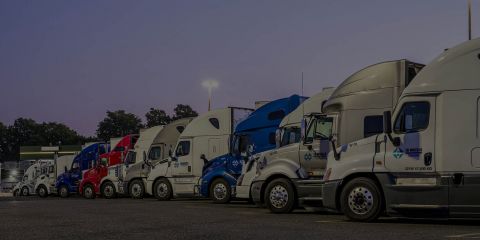
If you are reading this in late August, the freight that will decide your fourth quarter is already on the water. That timing is the first thing most Canadian importers get wrong.
Peak season gets treated as a warehouse problem that starts in November, when in practice it is a sequencing problem that starts in August and comes apart at the seams: the terminal, the rail ramp, the border, the mountain passes, and the hiring pipeline.
As of August 1, 2026, 18 Wheels Warehousing and Trucking has taken possession of a 210,000 square foot distribution facility at 3995 27B Avenue in Delta (Tsawwassen), positioned directly adjacent to Deltaport, Canada's primary container terminal. It is one of the shortest drayage moves available to shippers arriving through Metro Vancouver, and it is now part of our national network.
When people picture a career in logistics, they picture a truck. Fair enough, because drivers move the freight, and the industry would stop without them. But a single shipment travelling from a port in Vancouver to a store shelf in Winnipeg passes through the hands of a dozen people who never touch a steering wheel, and most of them found their way into the work sideways.
Dock scheduling is the practice of assigning carriers specific arrival windows and door assignments so a warehouse can match inbound and outbound volume to available labour and equipment. Done well, it cuts driver dwell time, eliminates most detention charges, and stabilizes delivery performance further down the chain. Done poorly, it turns a functional warehouse into the most expensive bottleneck in the network.
A nationwide 3PL network is a coordinated group of warehouses, cross-docks, and carrier partnerships operating under one provider across multiple Canadian provinces, so a shipper can position inventory close to demand instead of trucking every order from a single building. For companies serving customers from Victoria to St. John's, that structure is often the difference between a two-day delivery promise and a five-day one.
Finding the right third-party logistics partner in Vancouver is not a simple Google search decision. The Metro Vancouver market is one of the most active logistics corridors in North America, sitting at the intersection of Asia-Pacific trade routes, the Port of Vancouver (the largest port in Canada by tonnage), and a dense network of retail and e-commerce demand stretching from BC into the Prairies. The 3PL you choose will touch your inventory every single day. Getting it wrong is expensive.
In the third-party logistics (3PL) and co-packing industries, compliance isn’t just about checking a box—it is the foundation of consumer trust. Recently, the 18 Wheels Warehousing & Trucking headquarters and flagship facility in Burnaby, BC, underwent its rigorous Safe Quality Food (SQF) Edition 9 re-certification audit.
Canada is a nation defined by its vast geography and its unforgiving climate. From the torrential atmospheric rivers that wash out highways in British Columbia to the deep freezes that paralyze the Prairies and the massive snowstorms that blanket the East Coast, extreme weather is an inescapable reality of Canadian life. When these events strike, they do more than just cause property damage; they sever the vital arteries that keep our communities supplied.
Securing a purchase order from a major Canadian retailer feels like a victory until the chargebacks start rolling in. A missed delivery window, an improperly formatted Advanced Shipping Notice, or a pallet that fails to meet exact height requirements can quickly erode profit margins. For many suppliers, the cost of doing business with giants like Walmart Canada, Loblaw, and Costco has become a delicate balancing act of strict adherence to complex routing guides.
For decades, warehouse management has been a fundamentally reactive discipline. Supply chain managers looked at historical sales data, observed current inventory levels, and reacted to incoming orders as they arrived. This approach worked when consumer expectations were lower and delivery windows were measured in weeks rather than days. However, in today's hyper-accelerated logistics landscape, reacting is no longer sufficient. To stay competitive, you must anticipate.
Growth is supposed to feel good. For most food manufacturers, it feels like a fire drill. A regional grocery chain doubles a purchase order, a viral product spikes demand in a province you barely ship to, and suddenly your single warehouse is the bottleneck holding back the entire business. The product is selling. The supply chain just cannot keep up.
When the temperature drops across Canada, the logistics network that keeps our communities running faces its toughest test. Blizzards in the Prairies, icy roads in Ontario, and freezing rain in the Maritimes can bring transportation to a sudden halt. For local stores and families, these weather events quickly translate into empty shelves and delayed deliveries.
Vancouver 3PL providers optimize warehousing, transportation, and cross-border logistics for efficient business expansion across British Columbia and Western Canada.
When you run a growing supply chain, the last thing you want is a surprise. Unfortunately, operating without a clear view of your stock guarantees them. A lack of real-time data means you are essentially guessing what products are available, where they are located, and when they will ship. This guesswork quickly turns into missed sales, expedited shipping fees, and frustrated customers.
Importing goods into Canada involves far more than just the initial purchase price of your inventory. The true financial impact lies in your total landed cost, which is the comprehensive sum of product price, transportation, customs duties, taxes, insurance, and handling fees required to get a product from its origin to its final destination.
The race for faster delivery has fundamentally changed the logistics landscape. Canadian consumers now expect online orders to arrive within days, if not hours. To meet these demands without destroying profit margins, leading brands are shifting away from massive, remote warehouses and bringing their inventory directly into urban centers.
Every company has an origin story, but not every origin story is rooted in a specific place the way ours is. For 18 Wheels Logistics, Vancouver is not simply where we started — it is the city that taught us how to do business, who to serve, and what kind of company we wanted to become. Since 1989, the values, communities, and rhythms of Vancouver have shaped our identity in ways that still drive every decision we make today.
Managing a growing product line feels like a massive win until your warehouse runs out of space and fulfillment times start to slip. Adding new variations, colors, and sizes to your inventory is a great way to capture market share, but it also introduces a hidden operational burden. When your product catalog expands faster than your logistics infrastructure can handle, the resulting chaos eats directly into your profit margins.
Consumer packaged goods (CPG) brands are constantly looking for new ways to capture market share, increase average order value, and introduce new flavors to their customers. To achieve this, brands frequently rely on specialized packaging strategies to group products together. However, the terminology surrounding these strategies is often used interchangeably, leading to confusion and, more importantly, inflated production costs.
The modern supply chain is under immense pressure to deliver goods faster than ever before. Yet, as more delivery vehicles hit the roads, urban centers face unprecedented levels of gridlock and pollution. Finding a balance between rapid fulfillment and environmental responsibility is no longer optional; it is a critical necessity for the future of our cities.
The rapid growth of e-commerce has transformed our local communities, bringing distribution centers closer to residential areas than ever before. While this shift ensures faster deliveries, it also raises critical questions about the environmental impact of these massive facilities. Sustainable warehousing is no longer just a corporate buzzword; it is a vital necessity for protecting the air we breathe and the overall health of our neighborhoods.
Expanding your logistics network is a massive decision that requires precise timing and clear evidence. Relying on a single distribution center in Vancouver might work for a while but growth eventually strains even the most efficient operations. You need to know exactly when the cost of expanding is outweighed by the cost of doing nothing.
Shipping freight across the vast expanse of Western Canada requires more than just a fleet of trucks. It demands a strategic approach that balances speed, cost, and reliability. For businesses moving goods from the bustling ports of Vancouver to the distribution hubs of Calgary and beyond, intermodal transportation is the key to unlocking supply chain efficiency.
For years, spreadsheets have been the go-to tool for businesses managing their inventory. They are familiar, accessible, and seemingly cost-effective. But in today’s fast-paced market, especially within a bustling logistics hub like Vancouver, relying on manual data entry and static spreadsheets is like navigating a highway in a horse-drawn carriage. The speed of modern commerce demands a more powerful engine.
Shipping goods across the ocean is a massive feat of engineering and coordination. However, for many businesses, the real challenge begins the moment the ship enters the Burrard Inlet. The Port of Vancouver is Canada’s largest and busiest gateway, handling roughly $1 of every $3 of Canada’s trade in goods outside of North America.
The modern supply chain is no longer just about moving a box from point A to point B as quickly as possible. In 2026, the priority has shifted. Businesses now operate in an era where environmental accountability is just as critical as the bottom line. For many shippers and manufacturers, the biggest challenge lies in understanding their carbon footprint.
The retail world operates on a rhythm that is rarely steady. For many businesses, the year is a series of quiet lulls interrupted by massive, heart-pounding spikes in demand. Whether it is the frantic rush of Black Friday, the gift-giving surge of the December holidays, or a sudden summer boom for outdoor gear, these peaks are where reputations are made or broken.
The logistics world often feels like a giant, high-stakes game of Tetris. You have trucks arriving, trailers shifting, and warehouse teams ready to move. But when the timing is off, the whole game freezes. For years, the industry standard was simple: show up and wait your turn. This is known as First-Come, First-Serve (FCFS).
Vancouver is often celebrated as Canada’s Gateway to the Pacific. It is a bustling hub where massive container ships line the horizon, waiting to deliver everything from electronics to fresh produce. But lately, those ships have been staying on the horizon a little too long.
Navigating the world of high value logistics can feel like walking through a minefield of paperwork and regulations. If your business deals with alcohol, tobacco, or imported luxury items, you aren't just moving products. You are moving "excise-sensitive" goods. This means the government has a very specific interest in where those items are at every second of the day.
Modern supply chains rarely deal with a single type of product. Many distributors, manufacturers, and importers move a mix of ambient goods, temperature-sensitive products, and frozen inventory through the same network. Managing those different requirements at scale takes planning, infrastructure, and experienced handling. This is where multi-temperature logistics plays a critical role, especially when supported by a capable third-party logistics provider.
Moving goods efficiently today involves far more than simply choosing a route or booking a carrier. For businesses managing domestic and cross-border shipments, transportation decisions directly influence costs, delivery reliability, regulatory compliance, and customer satisfaction.
In the logistics industry, precision is the primary metric of success. For warehouses and distribution centers, a single miss-picked item or a damaged pallet is rarely just an isolated incident; it is a symptom of a breakdown in the underlying process. These errors create a ripple effect that results in costly returns, administrative headaches, and a gradual erosion of customer trust.