


2026
The Strategic Advantage of Nationwide 3PL Networks in Canada
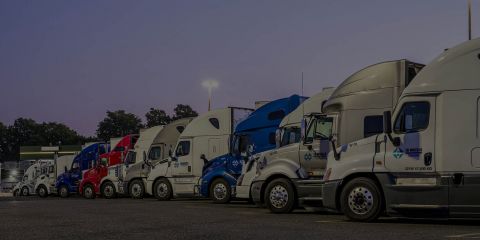
A nationwide 3PL network is a coordinated group of warehouses, cross-docks, and carrier partnerships operating under one provider across multiple Canadian provinces, so a shipper can position inventory close to demand instead of trucking every order from a single building. For companies serving customers from Victoria to St. John's, that structure is often the difference between a two-day delivery promise and a five-day one.
Canada makes this harder than most markets. Our population sits in a thin band along the southern border, stretched across roughly 5,500 kilometres and six time zones, with long empty stretches between commercial centres. A shipper running one warehouse in Mississauga can reach the Golden Horseshoe overnight. That same shipper reaches Calgary in three to four transit days and Vancouver in four to five, assuming the weather cooperates through the Rockies, which it does not always do between November and March.
Why single-node distribution quietly costs more than it looks
Most companies start with one warehouse because the math looks obvious. One lease. One team. One inventory pool. No duplicated safety stock.
The costs show up somewhere else. Every order travelling from Ontario to Alberta absorbs 3,000-plus kilometres of line-haul, and that freight bill rides on every single unit you sell in the West. Long zone shipments push parcel and LTL costs up sharply, and they lengthen your cash conversion cycle because the customer receives later and pays later. Meanwhile your competitor with a Calgary node quotes next-day delivery to the same buyer at a lower landed cost.
Then there is fragility. When a single facility carries all of your inventory, a labour disruption at one port, a rail service interruption, a highway closure through the Coquihalla, or a fire suppression failure in one building takes your entire national supply chain offline at once. The past few years have given Canadian shippers a steady education in this: port labour disruption on the West Coast, rail work stoppages affecting both major carriers, and repeated washouts on key western corridors. Companies with inventory in more than one province rerouted. Companies with one building waited.
What a multi-node network actually changes
Positioning inventory closer to demand compresses the last leg of the journey, and that last leg is where cost and service both concentrate. Move a pallet 3,000 kilometres by full truckload and the per-unit cost stays reasonable. Move that same volume as individual LTL or parcel shipments across the same distance and the cost multiplies.
A national 3PL flips the ratio. Bulk freight moves long-haul at truckload economics. Order-level shipments move short distances from a regional node. The result is usually a lower blended cost per order alongside a faster delivery promise, which is the rare pairing where service and cost improve together.
Carrier density matters just as much. A provider running consistent volume out of Vancouver, Calgary, Toronto, and Montreal negotiates from a different position than a shipper tendering occasional loads. That provider also holds relationships with regional carriers who serve Atlantic Canada, Northern Ontario, and the Prairies properly. Those are the lanes where national carriers often quote generously and deliver slowly.
The regional details that catch companies off guard
Canada is one market on paper and several in practice. A few realities reshape distribution strategy more than most planners expect:
- Quebec language requirements. Products and commercial documentation sold in Quebec must meet French-language obligations under provincial law, and recent amendments tightened requirements around packaging, trademarks, and public signage. Shippers frequently discover this after inventory is already staged in Ontario, which forces relabelling under time pressure.
- Provincial tax differences. Alberta charges no provincial sales tax, and the harmonized rate varies across the Atlantic provinces and Ontario. This affects landed-cost modelling and where companies choose to hold duty-paid inventory.
- Interprovincial trucking rules. Federally regulated carriers running across provincial lines operate under different hours-of-service and safety compliance requirements than intra-provincial operations, and equipment configurations legal in one province are not automatically legal in the next.
- Winter as an operating condition, not an exception. Chain-up requirements in B.C., extended transit through northern corridors, and reduced dock productivity in extreme cold all belong in the transit planning, not the disclaimer.
A national provider absorbs this complexity as routine work. A shipper managing five regional vendors absorbs it as five separate learning curves.
When a nationwide network is the wrong answer
Distributed networks are not free. Splitting inventory across nodes increases total safety stock, raises the risk of stranded units in the wrong province, and demands genuine demand planning discipline. Each additional location adds receiving overhead, cycle counting, and reconciliation work.
The honest threshold looks something like this: if a meaningful share of your volume (often a quarter or more) ships to a region more than a day's drive from your current warehouse, and your SKU count is manageable enough to forecast by region, a second node usually pays for itself quickly. Below that, a single well-placed facility supported by a strong national carrier program almost always wins.
We also see companies expand too fast, opening four nodes when two would have captured most of the benefit. Central Canada plus one western node covers a large majority of the Canadian population and most of the transit-time gain. Additional locations deliver smaller returns and larger inventory carrying costs.
How to evaluate a national provider
Ask about the network they own versus the network they broker. Both models work, but they behave differently under pressure, and you should know which one you are buying. Ask how inventory visibility works across sites: a single system of record beats four separate portals every time. Ask what happens when one node goes down. A provider who has actually rerouted volume during a disruption will describe the process in specific terms rather than general reassurance.
Finally, ask for cost per order shipped, not cost per square foot stored. Storage rate comparisons hide the number that actually moves your P&L.
Our team runs cross-Canada freight and distribution through facilities and carrier partnerships in multiple provinces, and we build network models around real order data rather than assumptions. If you want a straight read on whether a second node earns its keep for your volume, reach out to our team and bring twelve months of shipment history. That single file answers most of the question.
