


2026
How Warehousing Infrastructure Supports Local Manufacturing Growth
Visit enough Canadian manufacturing plants and you start noticing the same thing in the corner of almost every one of them.
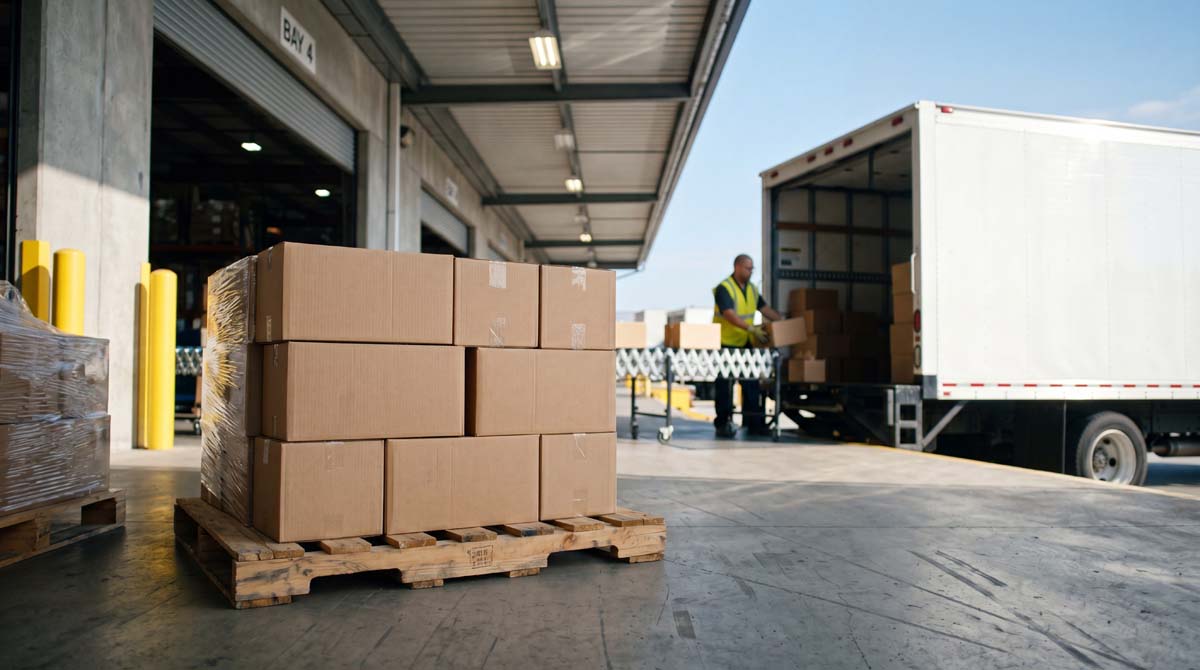
Pallets. Stacked three high against a wall that was never meant to hold inventory, in a space that used to be a staging area, next to a line that could run faster if there were somewhere to put what it produced. The plant manager will tell you it is temporary. It has been temporary for two years.
That corner is one of the quietest constraints on manufacturing growth in this country, and it shows up in almost every region we operate in. A business in Burnaby making beverages, a food processor outside Winnipeg, an auto parts supplier in Brampton, a seafood company in Halifax. Different products, same problem. The line can produce more than the building can hold.
Manufacturers Do Not Grow Into Space, They Grow Out of It
Growth for a manufacturer is rarely smooth. It arrives as a contract.
A retailer commits to a listing. A distributor takes on the line across three provinces. An export customer places an order that doubles the annual run. Each of those is good news, and each one lands with a requirement the plant was not built for: substantially more finished goods sitting somewhere between the end of the line and the customer.
The instinct is to solve it with real estate. Lease the unit next door, or find a bigger building. Both are slow, and in the current industrial market both are expensive. A manufacturer who has just won a contract does not have eighteen months to arrange a new facility, and often should not be spending the capital on rent when the same money could buy equipment.
The faster answer is usually to move finished goods off site rather than to expand the plant. It costs less, it happens in weeks rather than quarters, and it scales in both directions if the contract turns out to be seasonal.
Production Floor Square Footage Is the Most Expensive You Own
Here is the arithmetic that changes how manufacturers think about this.
A manufacturing facility is built and serviced for production. It has the power, the ventilation, the floor loading, the drainage, and often the food safety or cleanroom infrastructure that production demands. All of that is expensive per square foot, and all of it is wasted on a pallet of finished product sitting still.
When a plant uses a quarter of its floor area for storage, it is paying production-grade rates to warehouse goods. Move that inventory to a facility built for storage, and the plant gets a quarter of its capacity back without adding a square metre. For a manufacturer that is capacity constrained, that is often the single cheapest expansion available.
It also improves how the plant runs day to day. Congested floors slow material handling, create safety issues, and make production scheduling harder because nobody wants to run a batch they have nowhere to put. Clearing finished goods out tends to lift throughput before anyone touches the equipment.
That is the practical role of external warehousing for a manufacturer. Not just storage, but returning expensive space to the use it was built for.
Distance to Market Decides Which Contracts You Can Win
The second constraint is geographic, and it determines what a manufacturer can even bid on.
A producer in one province supplying customers in another faces a service level question they cannot answer from a single site. A national retailer wants delivery windows measured in days, into distribution centres spread across the country. Shipping everything from the plant means long transit times, high freight costs on partial loads, and a service commitment the manufacturer cannot reliably make.
Forward positioning solves it. Product manufactured in Manitoba and held in Ontario reaches the largest Canadian market overnight. Product made in BC and held in Alberta serves the prairies without crossing the Rockies for every order. The plant keeps running efficiently in long batches, and the inventory sits close to where it is needed.
This is how smaller manufacturers compete against larger ones with their own distribution networks. They rent access to a network instead of building it. A producer with a single facility can still quote national service if they have warehouse locations across the country holding their product.
The Packaging Line You Do Not Have to Build
The third constraint is one that catches manufacturers by surprise, usually about two weeks after they win a retail program.
Retailers want things the plant does not do. Variety packs combining several SKUs. Promotional multipacks for a specific season. Display-ready pallets built to a planogram. Retailer-specific labelling, French language requirements, promotional stickering, or a bundle format that exists for one campaign and then never again.
Building that capability inside a plant means buying equipment for work that runs a few weeks a year, and diverting production staff to it during exactly the period when production is busiest. Most manufacturers do the first program by hand, discover how much it cost them, and start looking for another way.
Handling it at the warehouse instead makes considerably more sense. The product ships from the plant in its standard case format, and co-packing work happens downstream where the labour and equipment are already set up for it. The plant never changes its run, and the retailer gets exactly the pack they asked for.
Manufacturing Is Community Infrastructure
It is worth stepping back from the operational detail, because these businesses matter well beyond their own balance sheets.
Manufacturing employs hundreds of thousands of Canadians, disproportionately in communities where those jobs are difficult to replace. A food processor outside a prairie town, a fabricator in a Fraser Valley industrial park, a parts supplier in the Ontario corridor. These are the employers that anchor local economies, buy from local suppliers, and sponsor the minor hockey teams.
When one of them cannot take a contract because there is nowhere to put the output, that is not just a lost sale. It is a shift that does not get added, a hire that does not happen, and often a contract that goes to a producer in another country instead.
The infrastructure that supports them is not glamorous. It is racking, dock doors, forklifts, trucks, and people who show up early. But it is a real part of why Canadian manufacturers can compete, and we take some pride in being part of it.
18 Wheels Warehousing and Trucking has worked alongside Canadian manufacturers since 1989. We operate more than two million square feet of warehousing across British Columbia, Alberta, Manitoba, Ontario, and Nova Scotia, along with co-packing lines and our own trucking fleet.
If your plant is running out of room before it runs out of demand, we would be glad to talk.
