


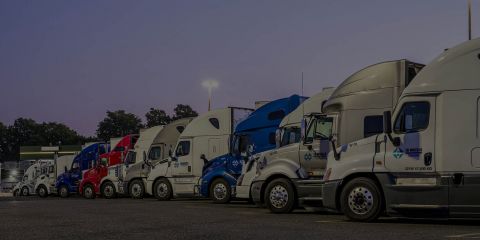

Shipping goods across the ocean is a massive feat of engineering and coordination. However, for many businesses, the real challenge begins the moment the ship enters the Burrard Inlet. The Port of Vancouver is Canada’s largest and busiest gateway, handling roughly $1 of every $3 of Canada’s trade in goods outside of North America.
While this volume is a testament to the region's economic power, it also creates a high-pressure environment. If you are new to the world of shipping, you might find yourself overwhelmed by a sea of technical jargon and unexpected invoices. Fees can pile up in the thousands of dollars before your cargo even leaves the terminal gates.
The Vital Role of Drayage in the Supply Chain
To understand how to de-risk your logistics, you first need to understand drayage. In the simplest terms, drayage is the transport of goods over a short distance. In the context of the Port of Vancouver, it refers to the movement of a shipping container from the ocean terminal to a nearby warehouse, rail yard, or distribution center.
It is often the shortest leg of the journey, but it is frequently the most critical. If the drayage process fails, the entire supply chain grinds to a halt. In Vancouver, this involves navigating congested port roads and bridge crossings to reach facilities in Richmond, Burnaby, or the Fraser Valley.
Effective drayage requires more than just a truck. It requires a deep integration with port schedules and a fleet that is ready to move the moment a container is grounded. We mitigate the risk of delays by maintaining a dedicated fleet and local expertise that understands the rhythm of the Vancouver waterfront.
Why Demurrage is the Most Expensive Clock in Logistics
If you want to understand risk in shipping, you have to understand the ticking clock of demurrage. When your container arrives at a terminal like Centerm, Vanterm, or Deltaport, the shipping line grants you a specific number of free days to remove the equipment.
Once those free days expire, the terminal begins charging you a daily fee. This is demurrage. These fees are not meant to be a storage service; they are designed as a penalty to keep cargo moving. They can range from a few hundred to over a thousand dollars per day per container.
Demurrage risk is often caused by factors outside of your control:
- Extreme weather events in the Fraser Canyon affecting rail flow.
- Labor shortages at the terminal.
- Customs delays or intensive examinations.
- Overcrowded warehouses that cannot accept new stock.
We de-risk this by acting as your eyes and ears at the port. We track your containers from the moment they are loaded in Asia, allowing us to plan for their arrival weeks in advance. By the time the ship docks in Vancouver, we have already cleared the path for immediate pickup.
Solving the Appointment Scarcity Problem in Vancouver
At the Port of Vancouver, you cannot simply show up with a truck and ask for your container. Every pickup and drop off must be scheduled through a rigorous reservation system. These slots are limited and highly sought after.
Think of it like trying to book a table at the most popular restaurant in town during a holiday weekend. If you miss your window, you might not get another one for days. Missing an appointment often results in a missed appointment fee from the terminal, and it pushes you closer to those dreaded demurrage charges.
We manage this risk through proactive appointment setting. Our dispatch team monitor terminal systems around the clock. We understand the specific release patterns of different terminals. This allows us to secure the best time slots, ensuring our drivers are in and out of the port before congestion peaks.
The Strategic Advantage of Local Warehousing and Cross-Docking
One of the biggest risks to drayage is a lack of space. If your final destination is full, the container stays at the port. To de-risk this, we utilize our extensive warehousing network across the Lower Mainland.
By having a massive footprint near the port, we can pull containers out of the terminal immediately to avoid demurrage, even if your primary warehouse isn't ready. We bring the container to our facility, unload the goods (a process known as devanning), and return the empty container to the port to avoid yet another fee known as detention.
This flexibility is a safety valve for your business. It allows you to keep the flow of goods moving regardless of fluctuations in your own storage capacity.
Mitigating Detention and Per Diem Charges on Equipment
While demurrage is the fee for the container staying at the port too long, detention is the fee for keeping the container outside the port for too long. Shipping lines want their equipment back so they can send it back across the ocean.
If a truck takes a container to a warehouse and sits on it for a week, you will be hit with per diem charges. In a busy hub like Vancouver, finding a place to return an empty container can be surprisingly difficult. Terminals often have gridlock or specific windows for empty returns.
We de-risk this by managing the entire lifecycle of the equipment. Our systems track exactly how long each container has been in our possession. We coordinate with the terminals to find the most efficient return paths, ensuring the equipment is back in the shipping line's hands well before the free time expires.
Leveraging Technology for Real-Time Container Tracking
You cannot manage what you cannot see. In the past, logistics was a black box where shippers just hoped their goods would arrive on time. Today, we de-risk the process through total transparency.
We provide our clients with real time data. You can see where your container is, whether it has been cleared by CBSA (Canada Border Services Agency), and when its appointment is scheduled. This data allows you to make informed decisions.
If we see a bottleneck forming at Deltaport, we can adjust our strategy in real time. This level of visibility transforms logistics from a reactive struggle into a proactive strategy.
The Impact of Seasonal Volatility on Vancouver Logistics
The Port of Vancouver is subject to massive seasonal swings. Between the lead up to the holiday shopping season and the rush before Lunar New Year, the system is often pushed to its breaking point.
During these peak times, everything becomes riskier. Appointments are harder to find, drayage capacity tightens, and the risk of demurrage skyrockets. We help our clients navigate these peaks through volume forecasting and pre-allocated capacity.
By partnering with us, you aren't just buying a single trip; you are securing a spot in a resilient system. We plan for the November rush in July, ensuring that our clients are protected when the rest of the market is scrambling for equipment and space.
Why Experience is the Ultimate De-Risking Tool
There is no substitute for knowing the people and the processes on the ground. The Port of Vancouver has its own culture, its own rules, and its own unique challenges.
Our drivers and dispatchers speak the language of the port. They know which gates move faster, which bridges to avoid during rush hour, and how to handle unexpected terminal closures. This institutional knowledge is what allows us to solve problems before they become expensive line items on your invoice.
When a crisis hits, such as a rail disruption or a port strike, our deep roots in the Vancouver logistics community allow us to find creative workarounds that others simply cannot access.
How You Can Build a Resilient Supply Chain for the Future
The world of global trade is not getting any simpler. Volatility is the new normal. To thrive, businesses need partners who are obsessed with detail and committed to risk mitigation.
At 18 Wheels Logistics, we have spent years refining our approach to the Port of Vancouver. We have invested in the equipment, the technology, and the people necessary to provide a world class drayage experience.
Logistics should be a competitive advantage, not a source of constant anxiety. By focusing on de-risking every step of the journey, we ensure that your cargo is always moving in the right direction.
Based in Vancouver, British Columbia, Canada, 18 Wheels relies on experience and integrity to make customers happy and remain on the cutting edge of shipping and logistics management.
If you have any questions about this article or you would like to talk to us about your shipping needs, please call us at (604) 439-8938.
