



2026
How Better Dock Scheduling Reduces Delays Across the Supply Chain
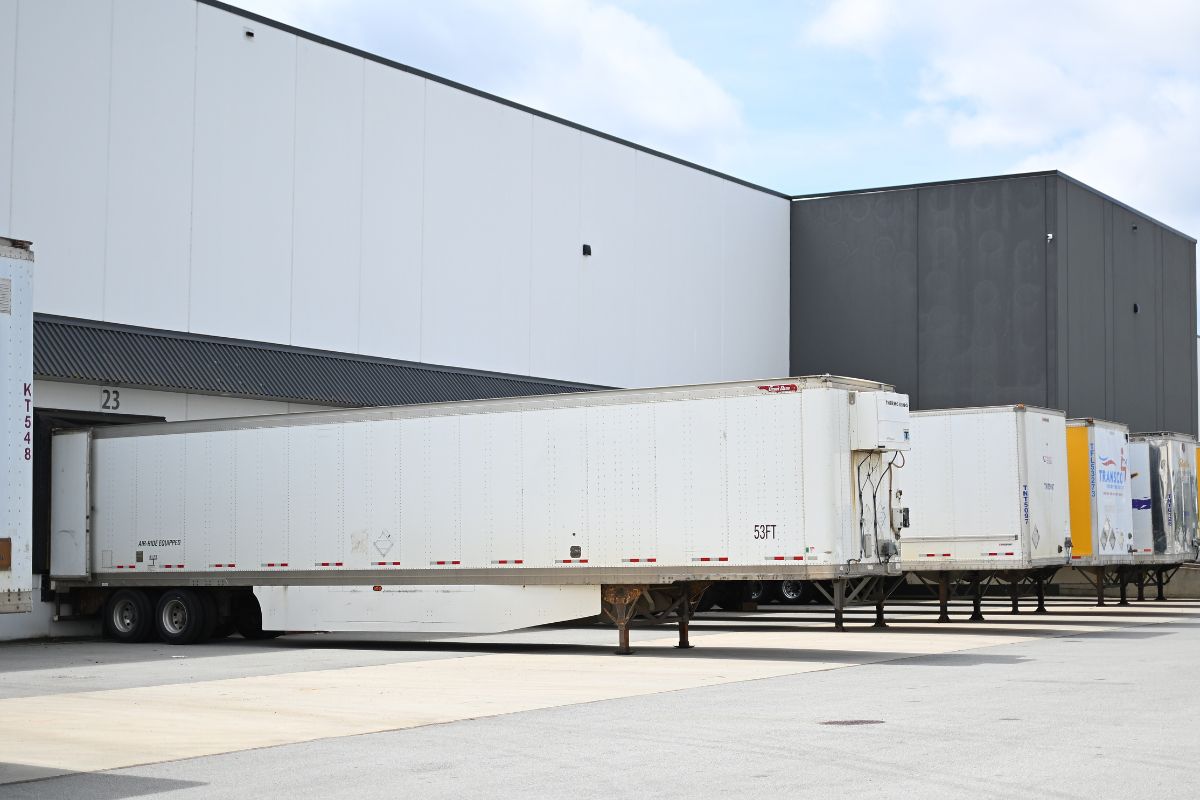
Dock scheduling is the practice of assigning carriers specific arrival windows and door assignments so a warehouse can match inbound and outbound volume to available labour and equipment. Done well, it cuts driver dwell time, eliminates most detention charges, and stabilizes delivery performance further down the chain. Done poorly, it turns a functional warehouse into the most expensive bottleneck in the network.
Here is the part that surprises people: most "carrier reliability problems" are actually dock problems. A truck that waits four hours at a receiving facility does not simply lose four hours. The driver burns hours-of-service time that cannot be recovered, arrives late to the next pickup, and pushes the delay into a completely different shipper's schedule. One unmanaged dock creates delays across three companies that have never spoken to each other.
The chain reaction nobody budgets for
Federal hours-of-service rules in Canada cap daily driving and on-duty time and require a defined off-duty block before the next shift. That clock does not pause because a warehouse is short two forklift operators. When a driver spends the morning in your yard, the afternoon delivery does not happen, not because the carrier failed, but because the regulation says it cannot.
The cost lands in several places at once. Carriers charge detention after a free period, typically one to two hours, and those charges appear as accessorials on invoices weeks later, disconnected from the day they were caused. Carriers also price lanes based on experience. A facility with a reputation for long waits quietly receives higher rates and fewer capacity commitments during tight markets, because dispatchers route their best equipment to shippers who turn trucks quickly.
Inside the building, the damage is different but just as real. Unscheduled arrivals produce a morning surge and an afternoon lull. Labour gets staffed for the peak, sits idle during the trough, and the cost per unit handled climbs. Receiving backs up, putaway falls behind, and inventory sits on the floor unavailable to pick, which generates stockouts on items physically present in the building.
What good dock scheduling actually looks like
Start with the arrival profile, not the software. Pull four to eight weeks of arrival times, unload durations, and pallet counts. Almost every facility discovers the same pattern: carriers cluster between 7:00 and 10:00 a.m. because that is when everyone assumes the dock opens, then the doors sit half-empty after 1:00 p.m.
Once you can see the shape of the day, appointment windows become a real tool. Match window length to workload rather than convenience. A 26-pallet floor-loaded container and a 12-pallet standard delivery do not belong in identical 60-minute slots. Build capacity around labour and equipment, not door count. Ten doors staffed by four forklift operators is a four-door operation with six parking spaces.
Then protect the schedule. An appointment system with no consequences for no-shows and late arrivals reverts to first-come, first-served within a month. Publish the rules, apply them consistently, and give carriers a straightforward way to reschedule.
Two structural choices deserve more attention than they usually get. Drop-and-hook removes the driver from the equation entirely: the carrier drops a loaded trailer, picks up an empty, and leaves in fifteen minutes while the warehouse unloads on its own schedule. It requires trailer pool capacity and yard space, but for high-frequency lanes it eliminates detention almost completely. Live unload stays appropriate for low-frequency, time-sensitive, or high-value freight where the driver must witness the count.
The metrics that tell you whether it is working
Track these four consistently, and review them monthly with your carriers rather than quarterly with your finance team:
- Dwell time. Arrival to departure, measured per carrier and per shift. This is your primary indicator, and it should be trending down.
- On-time arrival rate. The percentage of carriers hitting their window. Weak numbers here point at the carrier or at unrealistic windows; the split usually becomes obvious by lane.
- Detention spend. Dollars paid, and the specific days that generated them. Detention is a lagging measure of a scheduling failure that happened weeks earlier.
- Doors per hour and appointment adherence. Whether the plan you built survives contact with the actual day.
Watch how these move together. Falling dwell time paired with rising overtime means you moved the constraint from the dock to the labour plan rather than removing it.
Where dock scheduling programs go wrong
The most common failure is treating scheduling as a warehouse project instead of a network one. Receiving gets an appointment portal, purchasing keeps writing POs with no delivery windows, and vendors keep shipping whenever their production line finishes. The dock inherits chaos it cannot control. Purchase order terms need to carry the scheduling requirement, or the dock spends its days absorbing someone else's variability.
The second failure is over-engineering. A sophisticated yard management platform will not save a facility that has not decided how many trucks it can genuinely handle per hour. Plenty of operations get most of the available benefit from a shared calendar, published windows, and one person who owns the schedule. Software helps considerably at scale, but it is a poor substitute for the underlying decisions.
The third is silence toward carriers. Scheduling changes that arrive as unilateral policy generate resistance. The same changes introduced as a conversation (here is our current dwell time, here is our target, here is what we need from you) generate cooperation, because carriers want faster turns more than anyone.
The downstream payoff
A dock that turns trucks predictably produces effects well beyond the building. Carriers commit capacity because your freight is easy to plan around. Labour costs flatten because volume arrives evenly instead of in waves. Inventory becomes available for picking hours earlier, which improves same-day order cutoffs. Customer delivery dates hold, and the customer service team stops spending its mornings on exception calls.
None of that requires new equipment or a bigger building. It requires deciding, deliberately, when trucks arrive.
We manage inbound and outbound scheduling across our warehousing and distribution operations, and we work with shippers to rebuild appointment structures around actual volume patterns rather than legacy habit. If dwell time or detention charges have become a recurring line item, talk to our operations team. The first fix is usually free and takes about a week to show up in the numbers.
